Digital marketing is essential for businesses of all types, but the strategies used for business-to-business (B2B) and business-to-consumer (B2C) marketing differ significantly. Understanding these differences allows marketers to effectively target the right audience, meet their specific needs, and achieve business objectives. In this article, we will explore the key differences and strategies for both B2B and B2C digital marketing, along with actionable tips and examples.
Key Differences Between B2B and B2C Digital Marketing
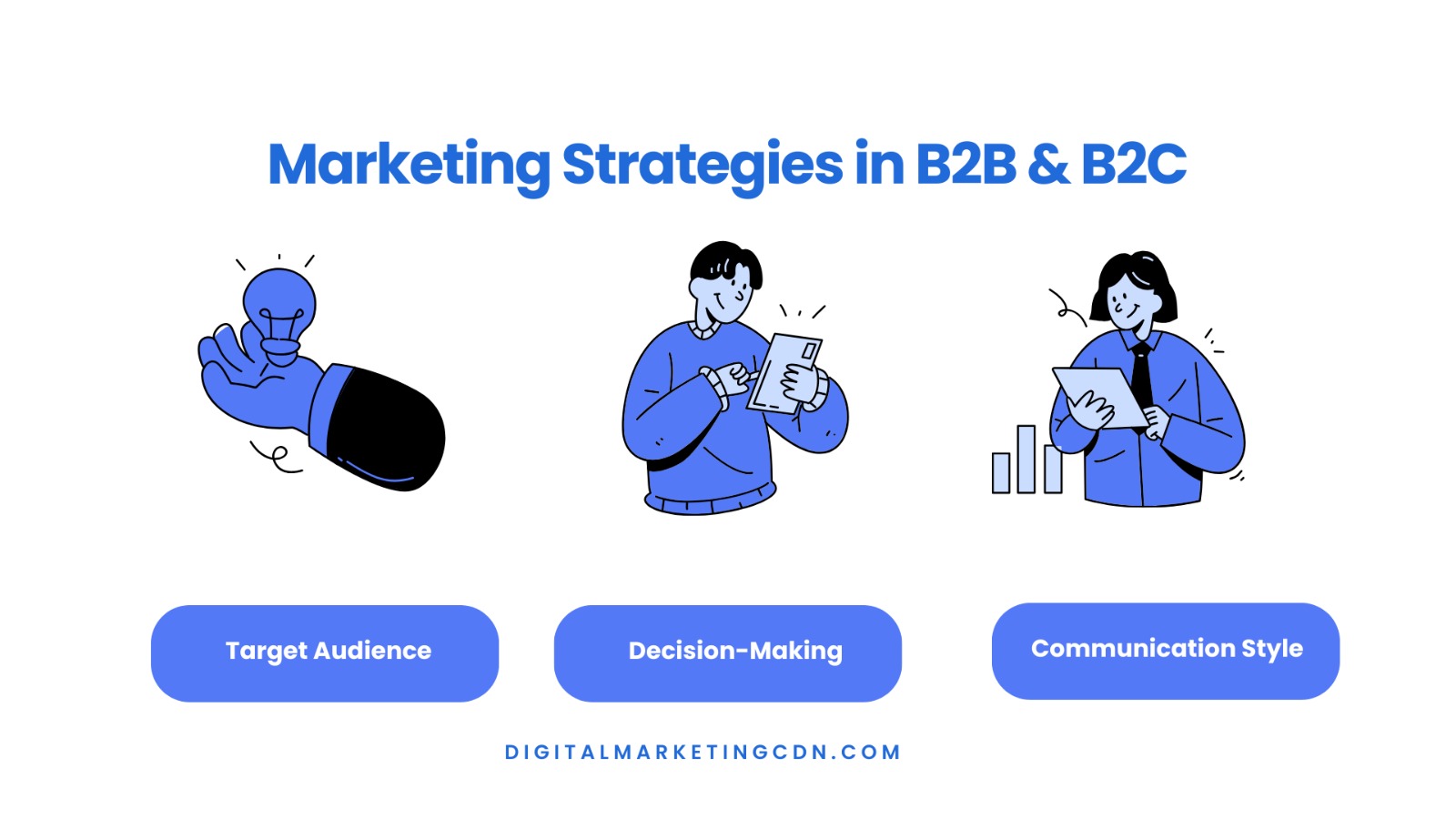
Target Audience
B2B Marketing
Targets other businesses, focusing on decision-makers such as company executives, managers, or procurement teams. The audience expects detailed, logical, and data-driven communication.
Example: A company selling CRM software aims to attract business owners and IT heads.
B2C Marketing
Targets individual consumers seeking personal benefits or solutions to everyday problems. The messaging often appeals to emotions and immediate needs.
Example: A retail brand advertising trendy apparel directly to consumers.
Decision-Making Process
B2B
Involves a longer decision-making process due to higher stakes, larger investments, and multiple stakeholders. Purchases are based on logic, ROI, and long-term benefits.
Example: A logistics company negotiating contracts with enterprise clients may require several meetings.
B2C
Decisions are quicker and influenced by emotions, personal preferences, and peer recommendations.
Example: A consumer purchasing a smartphone during a flash sale.
Content Strategy
B2B
Content should be educational, detailed, and authoritative, focusing on solving industry challenges and proving value.
Examples: Whitepapers, eBooks, case studies, webinars, and industry reports.
B2C
Content is entertaining, visually appealing, and easy to consume, aiming to grab attention quickly.
Examples: Instagram reels, TikTok videos, blog posts, and product reviews.
Communication Style
B2B
Formal, professional tone that emphasizes facts, figures, and detailed information.
Example: “Our AI-driven solutions can increase your team’s efficiency by 40%.”
B2C
Informal, conversational tone that evokes emotions and builds a connection.
Example: “Your dream vacation is just a click away!”
Marketing Channels
-
B2B
Channels such as LinkedIn, industry-specific forums, and email marketing are prominent. These platforms facilitate networking and professional communication.
-
B2C
Social media platforms like Instagram, Facebook, and TikTok dominate, as they are designed for direct consumer interaction.
Effective Strategies for B2B Digital Marketing
- Search Engine Optimization (SEO)
Focus on ranking for industry-specific keywords that decision-makers search for, such as “best Digital Marketers.”
Example: Optimizing blog posts with keywords like “Marketing solutions for startups.”
- Content Marketing
Provide in-depth content like case studies, whitepapers, and eBooks to demonstrate expertise.
Example: A Agency publishing a report on “Top PPC Techniques.”
- Email Marketing
Use segmented email campaigns to nurture leads by offering industry insights, product updates, and exclusive webinars.
Example: Sending a monthly newsletter to potential clients with tailored content for different industries.
- LinkedIn Advertising
Create targeted LinkedIn campaigns to reach professionals based on their job titles, company size, or industry.
Example: An HR software company running ads targeted at HR managers.
Effective Strategies for B2C Digital Marketing
- Social Media Marketing
Engage consumers with eye-catching visuals, videos, and interactive posts.
Example: A beauty brand hosting a TikTok challenge featuring its new product line.
- Influencer Marketing
Collaborate with influencers to reach a broader audience and build trust.
Example: A fitness brand partnering with a popular Instagram influencer to promote its protein shakes.
- Email Campaigns
Send personalized offers, discounts, and product recommendations to encourage purchases.
Example: A fashion retailer emailing customers with a “15% off your next purchase” offer.
- Pay-Per-Click (PPC) Advertising
Use platforms like Google Ads to display targeted ads that drive traffic to your website.
Example: A travel agency bidding on keywords like “affordable vacation packages.”